
An inhaled tracer used to visualize airflow in the lungs.
Xenon Xe-133 is an inhaled tracer that shows how air moves through the lungs to evaluate pulmonary function.1 It also supports V/Q imaging, a common test comparing airflow and blood flow to check for possible blockages.
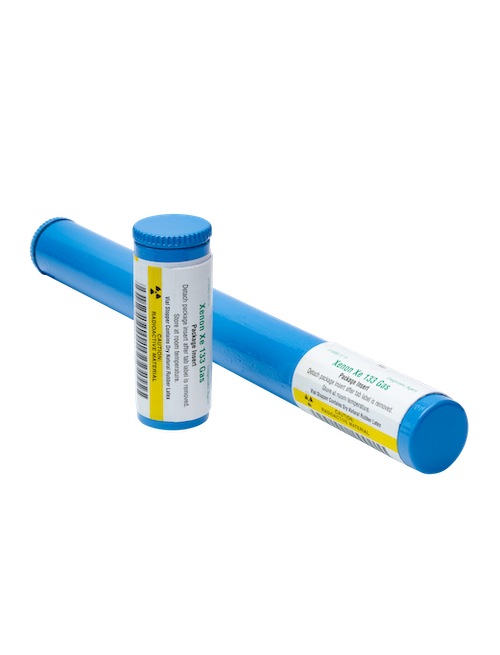
%20(5).jpg)
Xenon Xe-133 works with standard delivery systems and imaging equipment, supporting efficient pulmonary scans in routine clinical practice.
Inhalation of Xenon Xe-133 Gas has proved valuable for the evaluation of pulmonary function and for imaging the lungs. It may also be applied to assessment of cerebral flow.
None known.
Adverse reactions related to the use of this agent have not been reported to date.
Xenon Xe-133 Gas delivery systems, i.e., respirators or spirometers, and associated tubing assemblies must be leak-proof to avoid loss of radioactivity into environs not specifically protected by exhaust systems. Xenon Xe-133 adheres to some plastics and rubber and should not be allowed in tubing or respirator containers. The unrecognized loss of radioactivity from the dose for administration may render the study non-diagnostic. The vial stopper contains dry natural rubber latex and may cause allergic reactions in providers or patients who are sensitive to latex.
Xenon Xe-133, as well as other radioactive drugs, must be handled with care and appropriate safety measures should be used to minimize radiation exposure to patients and to clinical personnel. Radiopharmaceuticals should be used only by physicians who are qualified by training and experience in the safe use and handling of radionuclides and whose experience and training have been approved by the appropriate government agency authorized to license the use of radionuclides.
1. Xenon Xe-133. Prescribing Information. SHINE Technologies, LLC 2019
*V/Q: Ventilation-Perfusion lung scan.